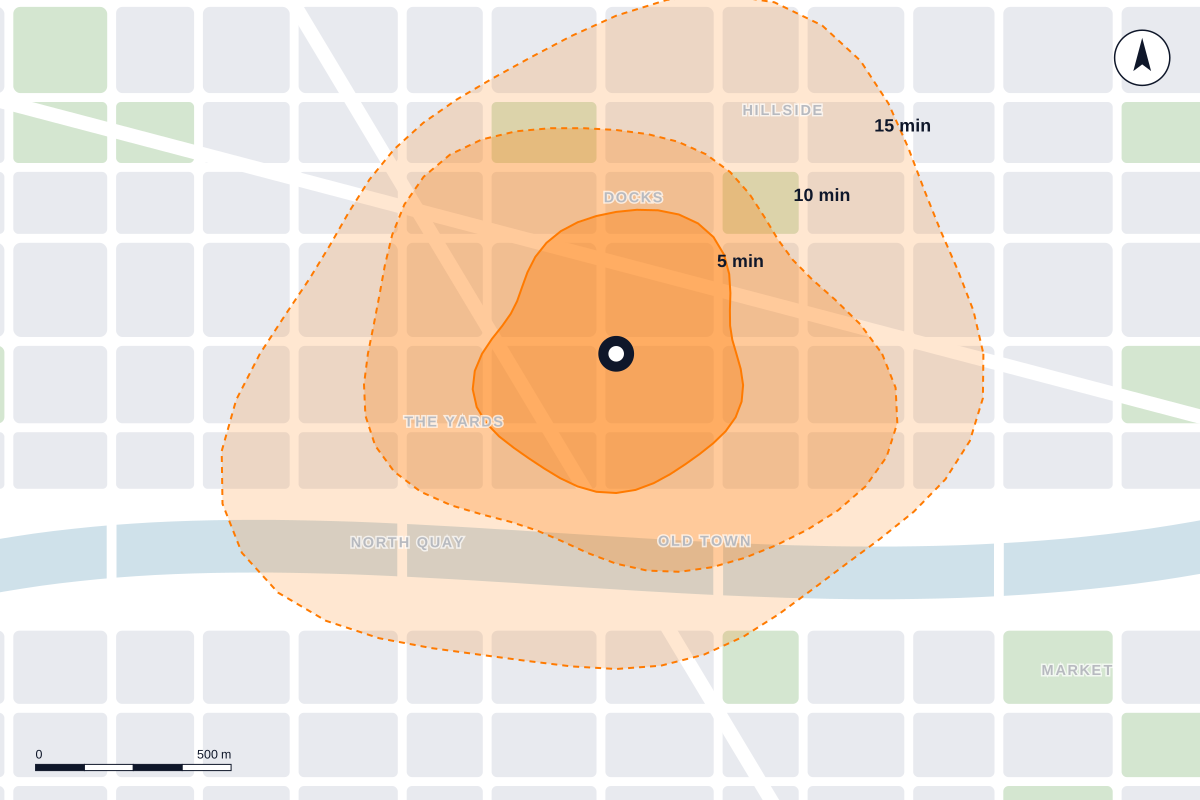
We measured walking times from all 462,000 homes in the city to the nearest GP, primary school and grocery store. Three in four homes reach all three within 15 minutes. The quarter that don't are concentrated in five post-war districts — and most of the gap could be closed with eleven new small premises.
Method
Walking times were computed on the full pedestrian network, including footpaths through parks and courtyards, at 4.5 km/h. Services come from the municipal register, cleaned against business licences and checked on site in a 5% sample.
What it means
The gap is not about density — some of the densest blocks are well served. It is about missing ground floors: post-war estates were built with homes on every level and nothing else. Converting small ground-floor units is faster and cheaper than any new building.