Why we leave dead wood
A fallen log hosts more life than the tree that grew it.
Landscape · Forest ecology · Restoration
We design woodlands, trails and restored river valleys that grow wilder, quieter and more alive with every passing decade.
Our way
A forest is not planted — it is started. We design the first layer and let time, water and wildlife do the rest.
Every project begins with the old trees, soils and streams already on site. We restore what was lost, connect fragments and leave room for succession.
The layers we design
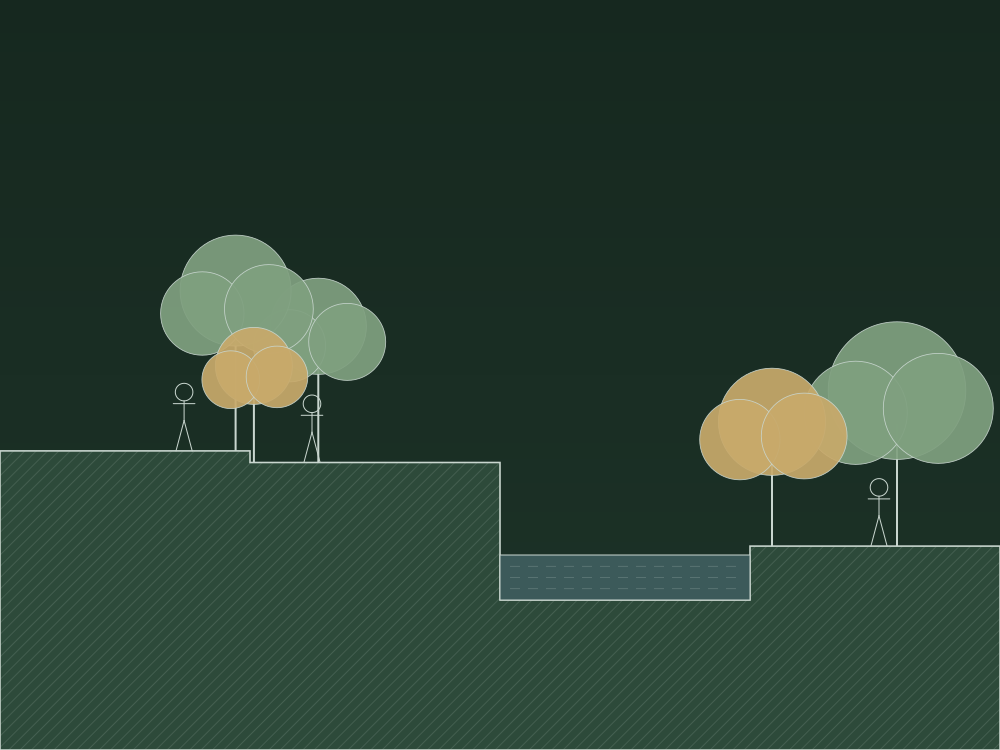
Douglas fir, western red cedar and bigleaf maple — the long-lived roof of the forest.
30 – 60 mVine maple, dogwood and young conifers waiting for light.
5 – 15 mSalal, huckleberry and Oregon grape: food and shelter for birds.
1 – 4 mFerns, mosses, fungi and fallen logs — where the forest recycles itself.
0 – 1 mFrom the journal
A fallen log hosts more life than the tree that grew it.
How our coastal plantings survived the hottest August on record.
Two years after restoration, the first coho are back.